
CRA Compliance Strategy for Smart Lock Manufacturers
Secure your integrated firmware, mobile apps, and cloud backends. Ensure your connected access products meet all EU Regulation 2024/2847 mandates.
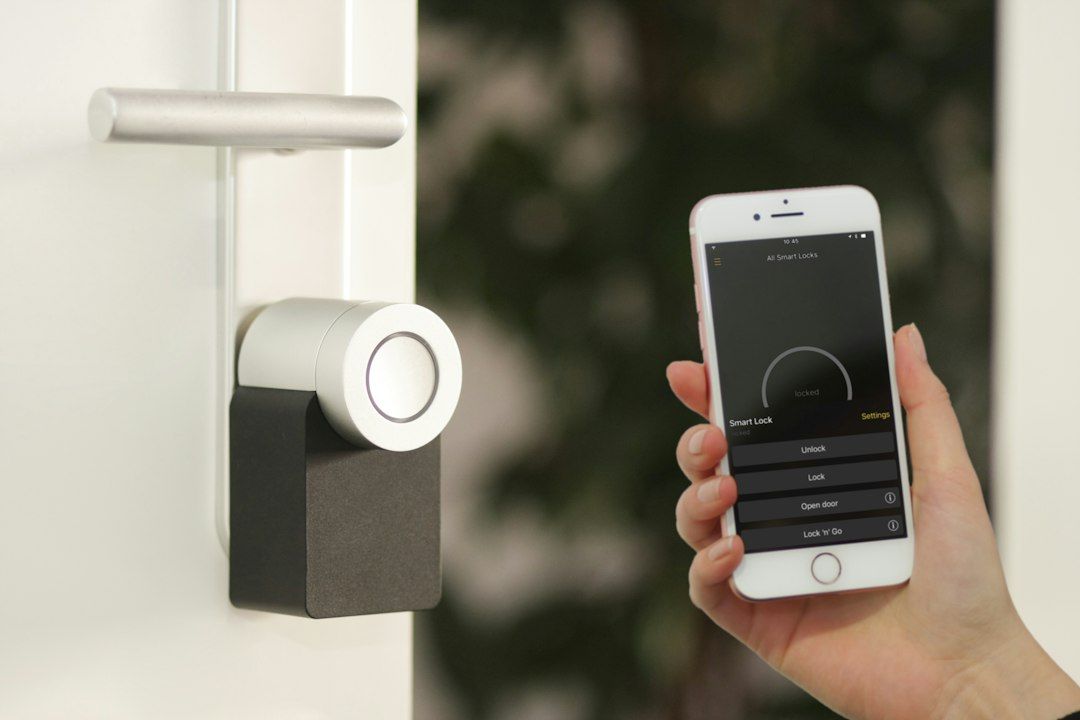

The Cyber Resilience Act (CRA) mandates that manufacturers of connected physical access hardware, accompanying mobile applications, and cloud services meet rigorous cybersecurity standards before EU market entry. Smart lock providers must generate comprehensive Software Bills of Materials (SBOMs), establish vulnerability handling workflows, and report exploited vulnerabilities to ENISA within 24 hours starting 11 September 2026, with full enforcement effective 11 December 2027.
Why Smart Locks Face Strict Regulatory Scrutiny
Smart locks are classified as products with digital elements that govern physical security. Under EU Regulation 2024/2847, hardware controlling physical access is subject to higher security thresholds than standard consumer IoT devices.
Because vulnerabilities in smart locks directly threaten physical premises, manufacturers must document security controls across the entire product lifecycle. This includes micro-controller firmware, BLE/Wi-Fi communication stacks, mobile pairing apps, and cloud APIs managing access commands.
Core CRA Requirements for Smart Lock Security
The CRA compels manufacturers to eliminate default credentials, secure remote update mechanisms, and maintain rigorous supply chain vigilance.
Full-Stack SBOM Visibility
Generate and maintain precise Software Bills of Materials across embedded firmware (C/C++, Rust), mobile applications, and cloud service dependencies.
Mandatory ENISA Reporting
Deploy rapid incident response workflows to notify ENISA and national CSIRTs of exploited vulnerabilities within 24 hours, with follow-up reports at 72 hours and 14 days.
Annex VII Technical Files
Compile essential technical documentation proving secure boot implementation, encrypted credential management, and robust patch delivery lifecycles.
Coordinated Vulnerability Policy
Publish a formal SECURITY.md policy defining clear vulnerability disclosure channels and guaranteed security update support windows.
Managing Complex Smart Lock Tech Stacks
Smart lock engineering teams manage fragmented codebases, including embedded RTOS firmware, cross-platform mobile apps, and scalable cloud microservices. The CRA treats these interconnected digital elements as a single product responsibility, requiring unified security oversight.
- Auditing dependencies across embedded code, backend APIs, and mobile apps
- Tracking upstream open-source vulnerabilities prior to firmware deployment
- Ensuring OTA updates are cryptographically signed and documented
- Structuring conformity files for physical access hardware audits
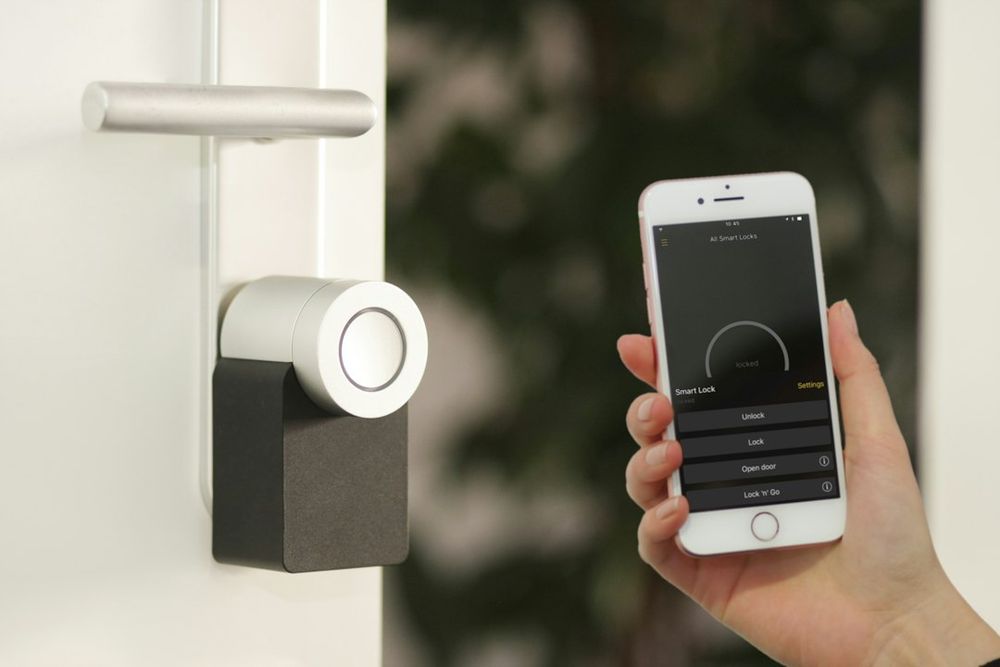
Product Classification and Risk Assessment
The CRA categorizes products into standard, Important (Annex III, Class I/II), and Critical (Annex IV). Smart lock manufacturers must determine if their systems qualify as Class I or II important products, particularly when serving as core components of physical access control infrastructures.
If categorized as an Important product, the CRA restricts self-assessment and may mandate third-party conformity evaluations. Regardless of classification, manufacturers must produce complete Annex VII technical files and prove security-by-design principles.
Critical Compliance Deadlines
Regulation 2024/2847 entered into force on 10 December 2024. Manufacturers must adhere to the following transition timeline:
- 11 September 2026: Mandatory reporting obligations begin. Manufacturers must report actively exploited vulnerabilities and severe security incidents to ENISA and national CSIRTs within 24 hours.
- 11 December 2027: Full application of the regulation. All smart locks sold in the EU must feature CE marking, an EU Declaration of Conformity, and comprehensive Annex VII documentation.
Non-compliance risks severe penalties: fines up to EUR 15 million or 2.5% of total worldwide annual turnover, plus potential market withdrawal orders.
Annex VII Technical Documentation Requirements
Annex VII documentation for smart locks requires detailed cybersecurity risk assessments covering physical tampering, wireless interface replay attacks (BLE, Zigbee, Thread), and cloud relay vulnerabilities. Documentation must clearly detail the mechanism for delivering security patches throughout the product's expected lifespan.
Prepare Your Smart Lock Codebase for CRA Audits
Scan your repositories, generate multi-ecosystem SBOMs, and identify compliance gaps in minutes.
4 Steps to CRA Compliance for Smart Locks
- 1
Map Your Software Supply Chain
Extract detailed SBOMs covering firmware libraries, mobile dependencies, and cloud services in CycloneDX or industry-standard formats.
- 2
Automate Vulnerability Monitoring
Track CVEs across all dependencies with automated alerts to ensure zero-day flaws are identified and patched immediately.
- 3
Establish ENISA Reporting Workflows
Formalize incident triage procedures to deliver preliminary notices within 24 hours and root cause notifications within 72 hours.
- 4
Assemble Annex VII Documentation
Generate pre-filled technical files and the EU Declaration of Conformity required for CE marking in the EU single market.
Accelerate CRA Compliance with CRAcheck
CRAcheck is a self-assessment platform designed to reduce the administrative burden of EU Regulation 2024/2847. By integrating with your GitHub repositories, CRAcheck scans your software ecosystem to identify compliance gaps without disrupting engineering workflows.
- Supports 9 package ecosystems: Rust, Go, C-compatible projects, npm, PyPI, .NET, PHP, Ruby, Java, and CycloneDX inputs.
- Calculates a normalized CRA compliance score based on regulatory criteria.
- Monitors third-party vulnerabilities with real-time alerts for unpatched components.
- Generates editable templates: Annex VII files, EU Declaration of Conformity, SECURITY.md, and ENISA incident escalation paths.
Note: CRAcheck provides automated tools for self-assessment. It does not replace official conformity assessment bodies where third-party evaluation is legally mandated.
Frequently Asked Questions
Does the CRA apply to smart locks manufactured outside the EU?+
Yes. The Cyber Resilience Act applies to any connected device made available on the EU market, regardless of the manufacturer's global location.
Are mobile apps and cloud backends in scope?+
Yes. Remote processing solutions and companion apps essential to the device's functionality are covered by EU Regulation 2024/2847.
What are the penalties for non-compliance?+
Violations can result in administrative fines of up to EUR 15 million or 2.5% of total worldwide annual turnover, whichever is higher.
Does CRAcheck provide official certification?+
No. CRAcheck is a self-assessment support platform. It is not an accredited conformity assessment body or an official certification authority.
When does ENISA reporting become mandatory?+
The obligation to report actively exploited vulnerabilities and severe incidents to ENISA and relevant national CSIRTs within 24 hours begins on 11 September 2026.
Start Your Smart Lock CRA Self-Assessment Today
Connect GitHub to inspect dependencies, produce CycloneDX SBOMs, and generate pre-filled CRA documentation.
Same topic — Par type de produit
New to the Cyber Resilience Act? Start with the complete guide.
The CRA guideFrom the blog
Check your CRA compliance in 1 minute
Free, no sign-up. Scan your repo and get your compliance score + pre-filled documents.